
Abatement Technologies Air Duct Cleaning in Westminster: A Homeowner’s Guide
The question we hear most about Abatement Technologies equipment isn’t whether it works. It’s whether it’s overkill for a normal house. Fair question. The short answer is no, and the reason comes down to airflow. A standard shop-vac rig pulls roughly 150 CFM of suction. Abatement Technologies’ PAS series negative air machines move 500 to 2,000 CFM through a true HEPA filter. That gap decides whether the debris sitting in your ducts gets captured or pushed into your living room while the job is underway.
If you’d rather not improvise with a rented blower, call (855) 337-2019. We answer 24/7. Fast dispatch from 7am to 7pm, Sunday through Friday.
What Makes Abatement Technologies Equipment Different From a Shop-Vac Rig?
Abatement Technologies builds filtration and negative-air equipment for mold and asbestos remediation, not for routine housekeeping. That origin matters. Remediation-grade machines are designed around three things: true HEPA filtration at H13 or H14 efficiency, variable CFM control so duct pressure can be dialed to the system rather than blasted through it, and negative-pressure verification with a manometer so the technician can prove containment is holding. A residential shop-vac has none of these. It has suction and a bag.
Here’s the practical difference in list form:
- Filtration: H13/H14 HEPA captures particles at the sub-micron level, including mold spores and fine mineral dust. A shop-vac filter catches the visible stuff and passes the rest.
- Airflow control: Variable CFM lets the technician match pressure to the duct size. Too much suction on a weak joint and you’ll pull debris through seams into wall cavities.
- Containment: Negative-air machines hold the work zone at lower pressure than the rest of the house, so air moves toward the filter, not away from it.
- Verification: A manometer confirms the pressure differential is actually maintained through the job, not just assumed.
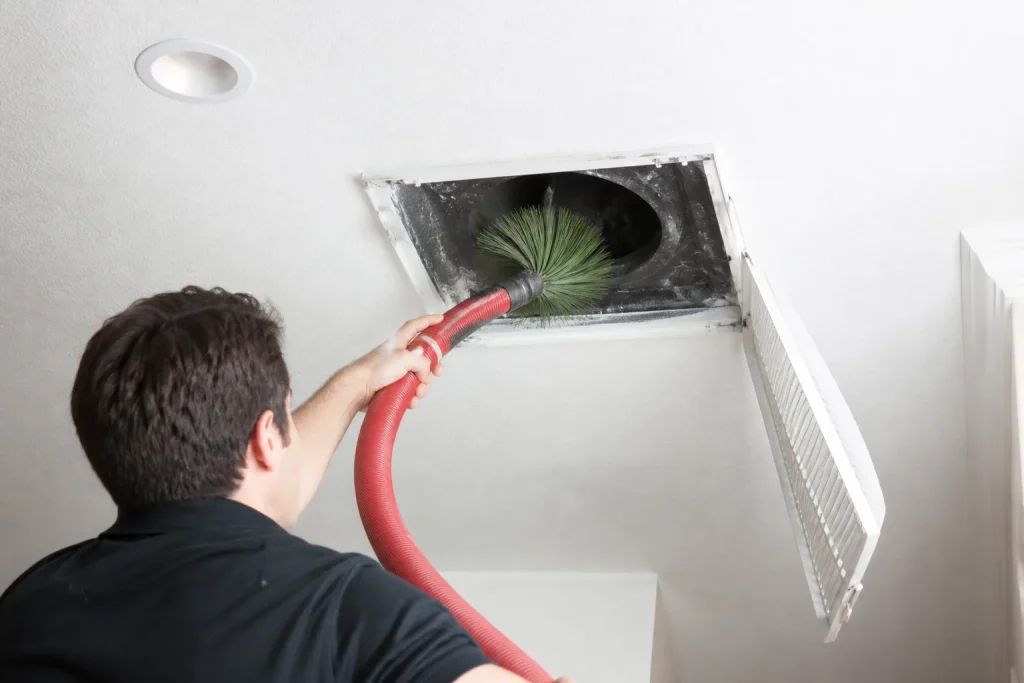
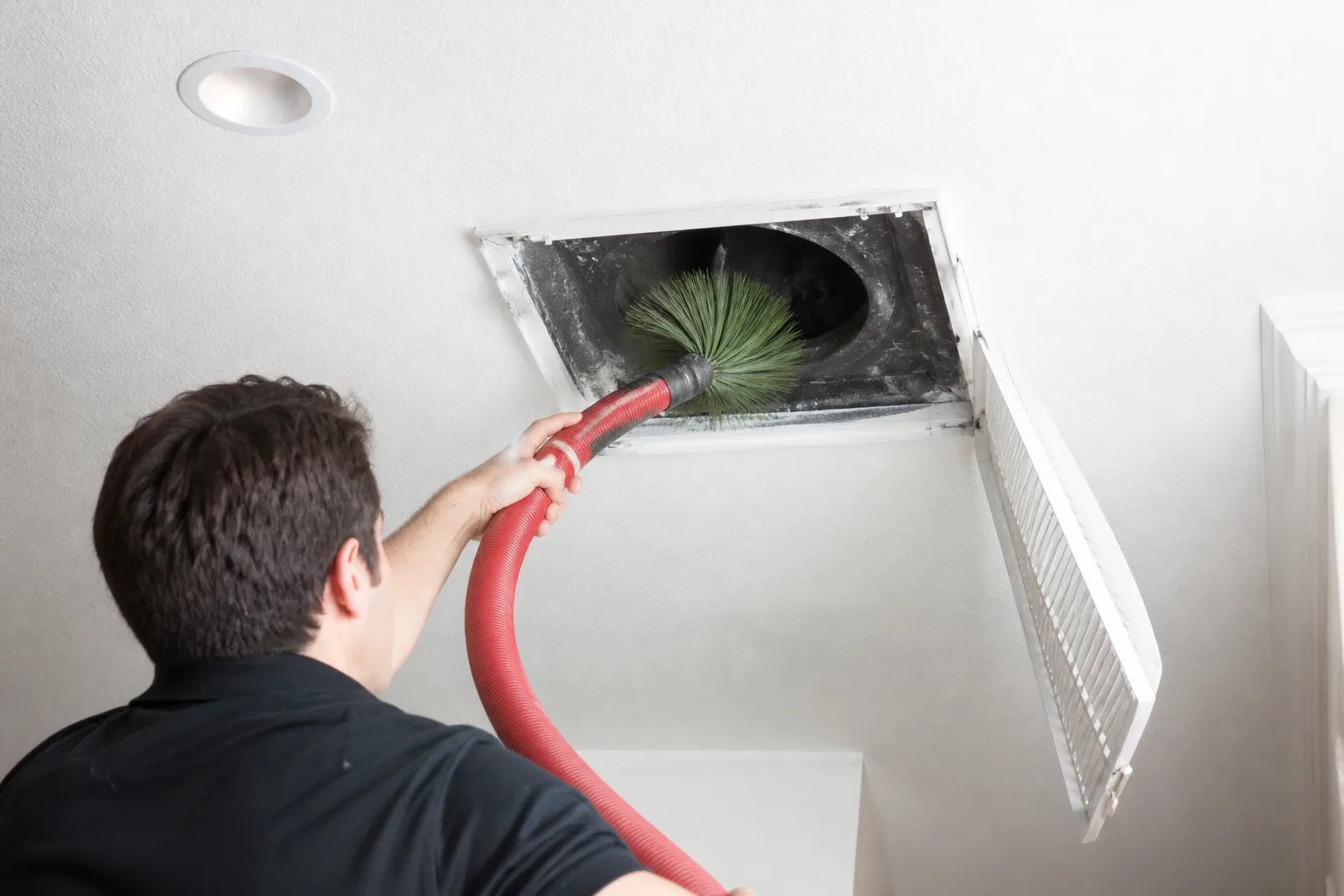
We pair that containment equipment with Air Duct Cleaning Westminster Pros standard tooling: Rotobrush rotary-brush systems to loosen what’s bonded to the duct walls, and Nikro HEPA-rated vacuums to pull it out. Containment without agitation just leaves the debris in place. Agitation without containment spreads it. You need both.
When Does a Westminster Home Actually Need This Equipment Level?
Not every job needs the full remediation setup, but several situations in Westminster make it the sensible choice rather than a luxury. Westminster’s dry, high-desert climate is one factor. The Front Range sits downwind of serious wildfire smoke events in summer, which pushes fine particulates into return ducts. The area’s older housing stock is another: pre-1980 homes in neighborhoods like Westminster Hills, Sherrelwood, and Berkley can have ductwork from an era when asbestos-containing duct wrap and sealants were common. Disturbing that material with an uncontrolled blower is exactly the wrong move.
The cases where we reach for Abatement Technologies containment include:
- Post-mold-remediation clearance. After remediation, residual spores in the HVAC system will recontaminate a cleaned space. Contained cleaning with HEPA filtration prevents that.
- Asbestos-era ductwork. Pre-1980 systems in older Westminster neighborhoods need careful handling so disturbed fibers don’t migrate into living areas.
- Post-wildfire smoke events. Fine smoke residue settles in return ducts and on the blower. Contained extraction removes it without redistributing it.
- Fine mineral dust. Westminster’s dry climate generates silica and mineral dust that standard filters don’t capture. HEPA filtration does.
Here’s the part most people don’t consider. A standard dusty duct job in Westminster still benefits from HEPA containment. Same machine, same filtration, same fine dust capture. The only thing you’re skipping is the mold or asbestos concern.
How Does Negative-Pressure Containment Work in a Home?
The physical setup is straightforward once you understand the sequence. A technician locates an access panel or creates one at a strategic point in the system, usually near the main trunk. The negative-air machine connects there and exhausts filtered air outside the living space or into a controlled area. The rest of the duct system is isolated in sections so that pressure differential can be maintained across the entire run rather than lost through open registers.
From there, the process runs like this:
- Seal open registers and returns to isolate the system.
- Connect the negative-air machine and confirm the pressure differential with a manometer.
- Run the Rotobrush rotary-brush through each branch to break debris loose from the walls.
- Extract loosened material with the Nikro HEPA vacuum while containment holds.
- Verify pressure differential remains stable throughout; if it drops, the seal has failed somewhere and work stops until it’s corrected.
- Reconnect registers and run the system to confirm airflow.
That pressure reading is the piece many contractors skip entirely. Without it, you’re taking the technician’s word that containment held. With it, containment is a measurable condition, not a claim. In our experience, this is the difference between a job that verifiably contains debris and one that merely looks tidy afterward. It also tells you whether the ducts are worth sealing; if we find failing joints during containment, we flag them for duct repair and sealing rather than ignoring the leak.
What Does Third-Party Air Quality Verification Look Like After Cleaning?
Verification is where the work becomes measurable rather than a matter of trust. A particle counter compares airborne particle counts in a room before cleaning starts and after the system has been running post-cleaning. A meaningful drop in respirable particles at multiple size ranges is the evidence that the work actually happened. If you’re in Westminster and you’ve had mold remediation or you’re concerned about asbestos-era ductwork, an independent indoor environmental professional (IEP) can perform a clearance test. That test is separate from the cleaning and should be arranged directly with the IEP, not through the cleaning crew, so the results stay independent.
We also use Abatement Technologies air scrubbers during the sanitizing stage, applying Guardsman antimicrobial products alongside Honeywell and Aprilaire filtration components where the system supports them. The goal is a measurable indoor air quality improvement, not just a cleaner-looking duct. When the numbers don’t move after cleaning, something was missed, and a particle counter will tell you that faster than your nose will.
When to Call a Pro
If your ducts are visibly coated, if you’ve noticed musty odors, uneven airflow, or allergy flare-ups that get worse when the system runs, that’s a sign to have someone look. If you’re in a pre-1980 home in an older Westminster neighborhood and you don’t know what’s wrapped around your ductwork, call before anyone starts cutting or blowing. Disturbing asbestos-era materials with the wrong equipment is a genuine health hazard, and a trained professional with proper containment is the only sensible path.
Same story with mold. Visible growth in a duct or on the blower is not a weekend project. HEPA-rated containment and proper antimicrobial treatment are what keep spores from spreading when the system is disturbed. We repair what we find, and that includes sealing failing joints so the dust you’re cleaning out doesn’t come right back through a leak.
Related services in Westminster: air duct cleaning, dryer vent cleaning, and HVAC cleaning round out the five-service menu alongside duct repair and sealing.
The Bottom Line
Abatement Technologies equipment isn’t overkill for a Westminster home. It’s the standard for any job where containment matters, and containment matters more often than people expect in this climate and this housing stock. HEPA H13/H14 filtration, variable CFM control, and verified negative pressure all come down to one thing: the debris gets captured rather than redistributed. Combine that with Rotobrush rotary-brush cleaning and Nikro HEPA extraction, and you get a genuinely thorough job rather than a surface pass.
Key takeaways:
- Shop-vac rigs move about 150 CFM; Abatement Technologies PAS machines move 500 to 2,000 CFM through true HEPA filtration.
- Negative-pressure containment with a manometer reading is verifiable; assumed containment is not.
- Pre-1980 homes in older Westminster neighborhoods warrant extra care with duct disturbance.
- Third-party IEP clearance is worth arranging if mold or asbestos has been a concern.
- A complete job covers cleaning, repair, sealing, and sanitizing from one crew.
If you’re in Westminster and need help, Air Duct Cleaning Westminster Pros offers free estimates. Call (855) 337-2019. We answer 24/7. Fast dispatch from 7am to 7pm, Sunday through Friday.
Frequently Asked Questions
Pricing depends on the size and complexity of your system, and the estimate is free. We set one flat price per system before work starts, so there’s no per-vent billing and no surprise once a technician is on site. Whole-system cleaning is quoted by the job, and you’ll see before-and-after photos of your own ducts when the work is finished. Call (855) 337-2019 for an exact quote. Estimates are free.
No. The same HEPA containment that captures mold spores also captures the fine silica and mineral dust that Westminster’s dry climate produces. That fine dust is exactly what a standard shop-vac filter lets through. You get better results on an ordinary job, not just on a remediation one.
Not always. A clearance test from an independent IEP is worth requesting if you’ve had mold remediation or if your home has asbestos-era ductwork. For a routine cleaning, before-and-after photos of your own ducts and a particle counter reading from the crew are usually enough. If you want an independent test, arrange it directly with the IEP so the results stay separate from the cleaning.
Ask for before-and-after photos of your own ducts and a particle counter comparison. With negative-pressure containment in place, the manometer reading during the job confirms debris moved toward the filter rather than into your living space. If a contractor can’t show you any of this, that’s your answer.
Written by the team at Air Duct Cleaning Westminster Pros.
Need Air Duct Cleaning Help?
Call Air Duct Cleaning Westminster Pros - the local pro we connect you with is licensed and insured, with free written estimates in Westminster.
(855) 337-2019