
Top Signs You Need Air Duct Cleaning Service – Don’t Ignore These
Dust on your registers is a low-sensitivity indicator. By the time it’s visible there, the contamination inside the trunk line is orders of magnitude worse. The earlier signals are almost always odor-based or airflow-based, not visible. Most articles tell you to look for dust; we’d rather teach you what your system is telling you before a single panel comes off. If you’d rather not climb into the crawlspace and start poking around, call (855) 337-2019 and we’ll take a look.
Why Airflow Problems Come Before Visible Dust
The first place duct problems show up is the thermostat, not the register. A dirty return line chokes the blower, and a choked blower can’t move the air volume the system was designed for. You feel it as a room that never quite catches up, or a system that seems to run forever and still leaves the back bedroom cold. Experienced technicians read these signals before opening anything up, because airflow tells you which part of the system is struggling and roughly how badly. In our experience, homeowners in Westminster notice the temperature symptoms long before they think about the ducts themselves. A common mistake is to blame the furnace or the AC unit when the real bottleneck is a restricted trunk line or a crushed flex run under the floor. Our technicians have up to 15 years of experience reading exactly these patterns, and the order of diagnosis matters: airflow first, then odor, then filter load, then a camera inspection inside the ductwork. Keep reading and you’ll see why.
- Rooms that take noticeably longer to reach setpoint usually point to a restricted supply run or a damper stuck partway closed.
- Registers that feel warm in cooling mode can mean the duct is losing cold air to a hot attic or crawlspace before it reaches the room.
- HVAC short-cycling often means the return can’t pull enough air, so the system satisfies the thermostat too fast and shuts down before the house is actually comfortable.
None of these alone proves the ducts are dirty. Together, they tell you it’s worth inspecting, and that’s a different and more useful conclusion than a checklist of visual cues.
The Odor Signals and What They Mean Mechanically
Your nose is a surprisingly honest diagnostic tool. Odors point to a specific location inside the system, which is why we ask what it smells like and when it starts rather than just how strong it is. A musty smell on first startup, right when the blower kicks on, usually points to biological growth near the evaporator coil. That’s the cool, damp place organisms like, and it’s where a proper air duct cleaning pass with a rotary brush system earns its keep. A burning smell is different: it suggests debris sitting on a heat exchanger surface, which is a reason to shut the system down and have someone look, not something to wait out. An animal smell, especially a sharp or musky one, suggests an active or past pest intrusion in a trunk line. That’s a case where cleaning and a duct inspection are both warranted, because if something got in there, there may be a breach that let it in. Each odor maps to a location and a mechanism, and that’s far more actionable than “smells funky.” Bring us the smell and when it happens, and we’ll tell you what it likely means.
What Your Air Filter Is Telling You About Westminster Ducts
A filter that loads in under three weeks is a red flag that most people miss. Filters carry a labeled service life, usually somewhere in the 30-to-90-day range depending on the media and the home. If yours is grey and clogged long before that window closes, your duct system is either leaking debris from the inside or drawing in unfiltered air through a breach downstream of the filter. Both point to a cleaning plus an inspection, and both make a filter change alone a band-aid on a larger problem. Westminster has its own seasonal wrinkle here. Spring months on the Front Range bring windstorms that push high-particulate air around, and older return systems with leaky boots take that air in through gaps instead of pulling it cleanly from the living space. Homes with crawlspace returns are especially susceptible. If you’re in a Westminster neighborhood near the hills and your filter clogs every spring like clockwork, that’s the pattern we’re describing. A HVAC cleaning visit with a Nikro HEPA-rated vacuum and a proper inspection will find the breach rather than just swapping filter after filter.
- Filter loads in under three weeks: suspect a breach or internal debris shedding.
- Filter loads roughly on schedule: your system is likely drawing air from where it should.
- Annual spring clogging in an older home: look at the boots and return seals, not just the filter.
Why Spring Windstorms Make Westminster Ducts a Priority
Seasonal particulate load is real, and Westminster gets a healthy dose of it when the spring wind kicks up. Older return systems with leaky boots are the ones that suffer, because every gap becomes an intake. A crawlspace return is the most exposed of the bunch. That’s why duct repair and sealing matter alongside cleaning: cleaning removes what’s inside, and sealing closes the gaps that let new material back in. You can’t clean your way to a sealed system, and you can’t seal your way to clean ducts. From dirty ducts to sealed, sanitized systems is the full arc, and spring is the season when Westminster homeowners feel the difference most. When you combine a cleaning with a dryer vent cleaning visit in the same spring appointment, you cover two systems that both trap lint and particulate – one thing off the to-do list instead of two. This is the kind of seasonal planning that keeps a home comfortable without that springtime smell every year.
What the Camera Actually Shows In Each Scenario
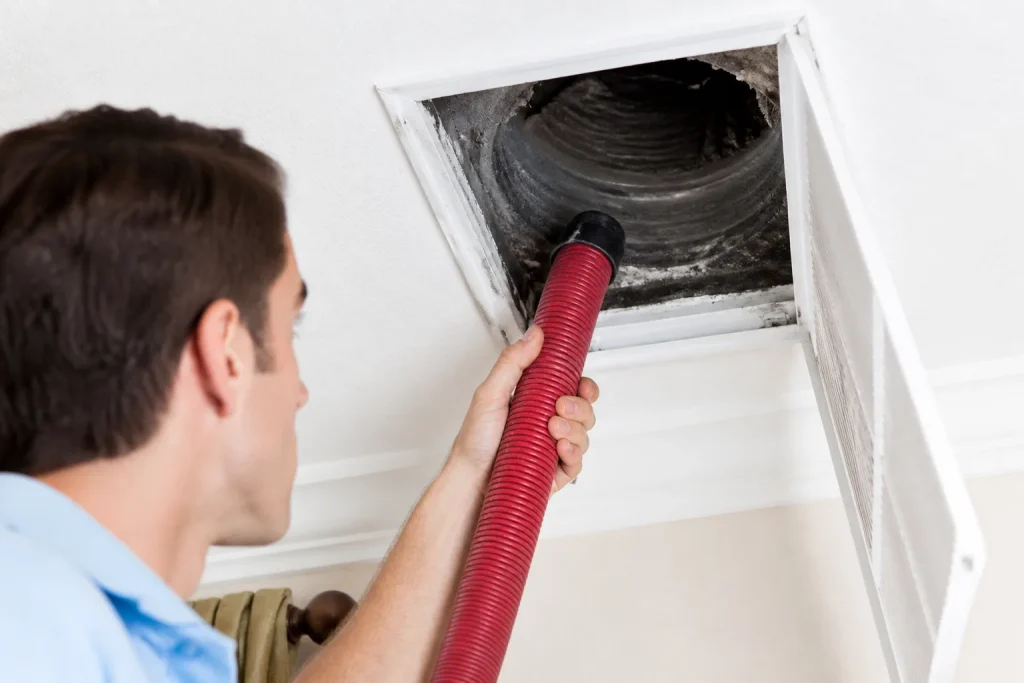
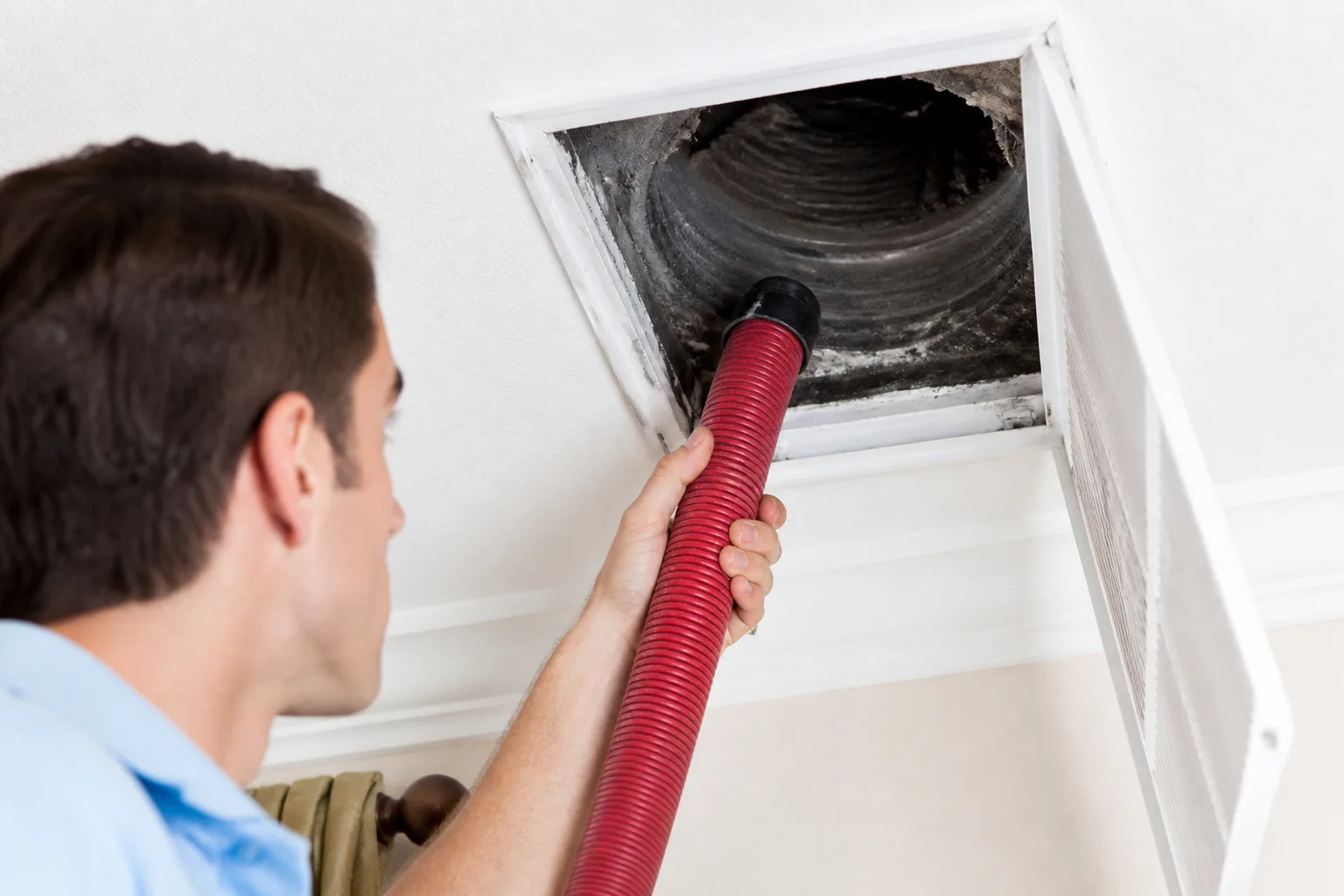
Here’s where we separate anecdote from evidence. When we run a camera into a system that exhibits the airflow and odor signs, we look for three categories of evidence. First, debris profile: soft dust is one thing, but caked particulate that has bonded to the duct wall means the rotary brush and mechanical agitation of a Rotobrush system are needed, not a shop vac. Second, biological growth: you’ll see it as a distinct discoloration near the coil and in damp runs, and it’s the mechanical cause behind that startup musty smell. Third, physical damage: crushed flex runs, separated joints, torn boots, and gaps at the plenum. Damage is the one people never expect, and it’s exactly why we treat air duct cleaning professionals as a diagnostic visit as much as a maintenance one. A camera run in a system that shows no signs will find light surface dust, intact ductwork, and clean coil surfaces – and then a cleaning is optional. That distinction matters. We repair what we find, and we tell you what the camera sees.
When to Call a Pro
You can change a filter and seal a register boot yourself. What you shouldn’t do is climb into a crawlspace and start pulling apart ductwork or a gas appliance. Some of these signals – a burning smell especially – warrant shutting the system off and calling. Others, like the musty smell, the filter loading early, and the spring clogging, are safe to sit with for a few days while you plan. The line we draw is this: if the system involves the heat exchanger, gas lines, or electrical, that’s a trained professional’s job. Cleaning and inspection are safe to schedule, and they give you a clear answer about what’s actually happening in the ducts. If you’re in Westminster and want to know whether your symptoms are “cleaning” symptoms or “something else” symptoms, call (855) 337-2019. We answer 24/7. Fast dispatch from 7am to 7pm, Sunday through Friday, and the estimate is free.
Related services in Westminster: If you’ve got airflow symptoms, HVAC cleaning is the natural starting point. If you’ve got a filter loading early or a musty smell, air duct cleaning is where to begin. And if spring lint is your problem, dryer vent cleaning belongs on the same list.
The Bottom Line
The early signals of a duct problem are almost never visible. They’re in the way your house heats unevenly, the smell that greets you at startup, and the filter that fills up too fast. Inside the system, a camera tells the truth: bonded debris, biological growth, or physical damage – each with its own fix. Cleaning with Rotobrush and Nikro equipment removes what’s there; duct repair and sealing keeps it out; Honeywell and Aprilaire filtration and a Guardsman application through our Air Quality & Sanitizing service handle the air-quality side. One crew, start to finish. If you’re in Westminster and need help, Air Duct Cleaning Westminster Pros offers free estimates – call (855) 337-2019. We answer 24/7. Fast dispatch from 7am to 7pm, Sunday through Friday.
Frequently Asked Questions
You need it when you have a cluster of signals, not one. Musty startup odor plus a filter that clogs early plus uneven heating together point to a real problem. A single symptom on its own might be a filter or a register, not the ducts. Call (855) 337-2019 for a free estimate and an honest read on what you’re seeing.
It usually means biological growth near the evaporator coil, the cool and damp spot in the system where it likes to settle. It’s a genuine air-quality signal and a reason to have the system inspected and cleaned. Call (855) 337-2019 to schedule an inspection.
No. Filters carry a service life measured well beyond three weeks, so early clogging means your system is either shedding debris from inside or drawing in unfiltered air through a breach. Both call for a cleaning and an inspection of the boots and seals. Call (855) 337-2019 for a free estimate.
Front Range windstorms push high-particulate air around, and older return systems with leaky boots or crawlspace returns take that air in through gaps. Cleaning plus sealing closes the loop. Call (855) 337-2019 to book a spring visit.
Written by the team at Air Duct Cleaning Westminster Pros.
Need Air Duct Cleaning Help?
Call Air Duct Cleaning Westminster Pros - the local pro we connect you with is licensed and insured, with free written estimates in Westminster.
(855) 337-2019